

Feb 10, 2026
| ROUNDTABLES | The Daily Star
A roundtable titled “Just Energy Transition: Implications on the Political Landscape of Bangladesh” was held on 20 January 2026, at The Daily Star Centre, Dhaka. Jointly organised by The Daily Star, Coastal Livelihood and Environment Action Network (CLEAN) and other CSOs, the dialogue brought together representatives from notable political parties, CSOs, and NGOs. The Roundtable aimed to deliberate on the 13 Point Citizens’ Demands to political parties ahead of the 13th National Elections regarding the Just Energy Transition.

Monower Mostafa
Networking Advisor
Coastal Livelihood and Environment Action Network (CLEAN)
The power sector has become a ‘corruption sector’ over the last 16 years of governance, bleeding trillions of taka. Our key expectation for party manifestos is a clear roadmap addressing two interlinked crises: energy security and systemic graft. We are 70% import-dependent on fossil fuels, leaving us dangerously exposed to global price shocks. While international pressure and our own commitments necessitate a shift, a powerful syndicate vested in fossil fuels has blocked progress on renewables. Any credible manifesto must commit to breaking this corrupt circuit. We must abandon absurdly high demand projections that led to overcapacity and crippling capacity charges. Future policy must ensure security through renewables, drastically reduce losses, and restore the ministry’s health. The ‘Quick Supply’ act is gone; we now need transparency and realistic, long-term planning.

Zahir Uddin Swapon
Advisor to the Chairperson
Bangladesh Nationalist Party
The world faces political and security crises linked to dwindling fossil fuel supplies, as seen in countries such as Venezuela and Iran. For any nation, strategic resources such as energy and electricity are integral to its existence. An energy security framework is now strategically more critical than even food security. Crises in energy cannot be viewed superficially or blamed merely on a lack of expert knowledge. It is rooted in failures of the political process. Problems in the energy sector are created and worsened by systemic corruption. The previous ruling party flowed a political narrative that justified these actions, often supported by a coalition and a section of intellectuals. This corrupt system targets national resources and strategic sectors. Even when political processes fail, the authority to resolve major strategic crises remains with those who hold state power.

Readus Salehen Jawad
Member of the Central Council
Network for People’s Action (NPA)
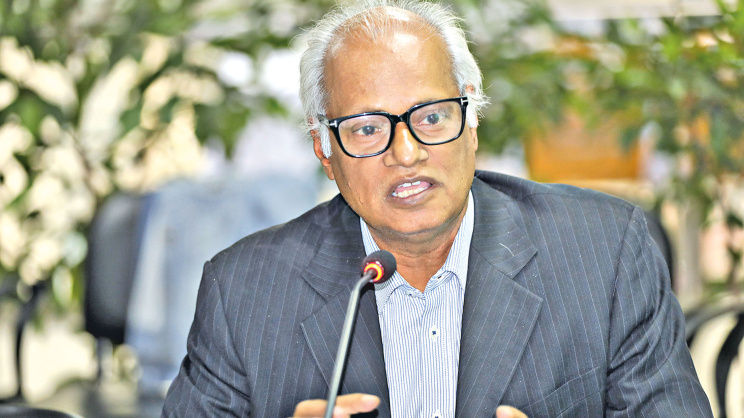
Our discussion must address a critical issue: the government’s draft Integrated Energy and Power Sector Master Plan (IEPMP). This plan locks us into fossil fuels, promotes false solutions like hydrogen-ammonia, and ignores the need for smart grids and decentralised generation. Most alarmingly, it has no mechanism for public participation, no framework to protect displaced workers or communities, and no accountability for issues such as capacity charges. The stance should be clear: Energy decisions must be democratic. We demand community profit-sharing and management stakes. Crucially, any move towards new coal power is a red line; it would destroy any just transition. This transition is not merely about fuel sources; it is about transforming power relations, ensuring democracy and justice, an agenda I find lacking in current party manifestos.
Razequzzaman Ratan
Joint General Secretary
Socialist Party of Bangladesh (BASOD)
In Bangladesh, we have double the power generation capacity, yet our per capita consumption is among the world’s lowest. The people bear the burden of the subsidy for this inefficient system. The priority must be to optimise and fully utilise the capacity we already have. Adding more plants will only deepen financial losses and increase the subsidy burden on the public. Bangladesh must urgently invest in exploring and extracting its own natural gas using national capacity, rather than relying on foreign companies. Our potential in solar, hydro, wind, and biomass remains largely untapped and must be developed without delay. The current model makes us dangerously dependent on external actors; we have given the ‘key to our house’ to foreign entities. Transition is inevitable, but to make it just, we need a fundamental political shift that stops the bleeding of public wealth and prioritises energy sovereignty.

Kazi Sajjad Zahir Chandan
President
Communist Party of Bangladesh (CPB)
Despite promises and a constitution that declares citizens as owners of national resources, Bangladesh’s energy sector has historically been plundered, with vast sums concentrated in the hands of a wealthy elite. Successive governments, regardless of their rhetoric, have represented this plundering class, favouring foreign companies and private interests over the people. This is evidenced by secretive agreements for power plants and fuel imports with foreign entities, locking the nation into corrupt, dependent deals. A patriotic, democratic government is needed to prioritize the people’s interest in energy. Until then, leftist and democratic forces must continue to oppose harmful policies like gas exports and controversial power plants. The solution lies in breaking this cycle of elite-friendly governance and implementing a manifesto that ensures the energy sector is secure, transparent, and serves the common people.

Nazmul Haque Prodhan
General Secretary
Bangladesh Jashod
Historically, governments have pursued flawed power projects, from outdated plants to installing unnecessary infrastructure such as poles without lines. More recently, massive overcapacity in power generation has been created, with heavy reliance on costly coal and gas contracts, leading to excessive capacity payments to power companies even when plants sit idle. This system has become a channel for large-scale financial plunder, where billions are siphoned off, exemplified by individuals amassing vast wealth abroad through these dealings. Despite public awareness of this looted wealth from the power sector to banks and the stock market successive governments have failed to conduct proper investigations or hold anyone accountable. The current administration has continued making these questionable capacity payments without scrutiny, effectively legitimizing past corruption. While access to electricity has improved, the underlying systemic rot remains unaddressed. We must move beyond rhetoric to a common, actionable commitment for a sovereign and just energy future.

Navid Nowroz Shah
Joint Chief Coordinator
National Citizens’ Party (NCP)
Our commitment is to a non-discriminatory Bangladesh, and energy policy is central to this. Global conflicts are fuelled by energy wars, and our national crisis stems from a flawed political system, not just technical failures. For 17 years, a corrupt political narrative enabled looting, supported by intellectuals and the media. Therefore, your expert analysis must also diagnose this systemic failure of political thought. The solution lies solely in the political process. In our manifesto, we advocate for Integrated Resource Planning to balance import dependency with emission reduction. We will mandate rooftop solar on public buildings and utilise our riverbanks for solar plants. Any transition must involve local communities and address job losses. We commit to publishing all foreign agreements and fostering a domestic electric vehicle industry to create new economic sectors.

Ashraful Alam
Joint Secretary General
Islami Andolan Bangladesh
Bangladesh is resource-rich and has a capable workforce. Our fundamental problem is not a lack of expertise but systemic corruption in state management. Personal intentions are good, but collective governance has consistently failed. Therefore, our primary commitment is zero tolerance for corruption, rooted in our faith and the principle of divine accountability for every atom of injustice. We must utilise our own energy resources, from atomic to solar, and reduce our dependence on foreign sources. The government’s duty is to create opportunities and ensure no corruption taints it. If we can purge this corruption from the administration, we will manage a transition that truly serves the people’s needs and delivers fairness in the energy sector.

Hasan Mehedi
Member Secretary
Bangladesh Working Group on Ecology and Development (BWGED)
Bangladesh’s energy sector has lost more than Tk 2.2 trillion in 17 years through inefficiency, while capacity payments to idle or barely used plants added another Tk 1.76 trillion. We have seen accountability efforts have faced intimidation, arrests, and political pressure. As a national election nears, many see an opening for change. For the last six months, advocacy groups have pressed major parties to commit to energy justice in their manifestos. A key demand is a shift toward renewable energy, which analysts say would eliminate the need for new fossil fuel projects and render the opaque Energy and Power Sector Master Plan (EPSMP) irrelevant. Today, we are calling for an overhaul of policymaking and propose a participatory process from the outset, ensuring civil society involvement and protecting rights of women, workers, and indigenous communities. Such inclusion can be essential for a fair transition and nationwide reform.

Munir Uddin Shamim
Director - Programme, Evidence and Learning
Ethical Trading Initiative Bangladesh (ETIB)
The energy sector is intrinsically tied to political economy, making it vulnerable to imposed, unproven ‘false solutions’. My request to all parties is to reject these, considering our limited capacity and foreign interests. A renewable transition can create over 1 million jobs, aligning with development goals. Crucially, we must instil ‘Responsible Business Practice’: transparency, accountability, and inclusiveness. Our current Public Procurement Act fails this test; it must be amended to make all power sector agreements public and to mandate citizen participation in monitoring projects, which is a constitutional right. Finally, political parties should consider the large, environmentally conscious youth electorates and formally include these demands in election manifestos to ensure a credible and just energy pathway.

Bareesh Chowdhury
Policy and Campaigns Coordinator
Bangladesh Environmental Lawyers Association (BELA)
The lesson from the previous regime is stark: our corrupt, dysfunctional energy sector left us utterly exposed to external shocks. The 2022 LNG price spike halted imports for ten months, quadrupled power prices, and ignited the cost-of-living and reserve crises that fuelled later unrest. Energy security is therefore an urgent political issue. We have colossal overcapacity; peak demand is only 40-45% of our generation capacity. It is senseless now to invest in new fossil fuel plants. Instead, we must embrace renewables’ modular advantage: decentralised solar on rooftops, not massive land grabs. Our policies perversely tax renewables while subsidising fossil fuels; we must create a level playing field. I urge all parties to see the renewable sector’s huge employment potential, cited here as 2 million jobs, and commit to this essential transition.

Md. Abul Kalam Azad,
Program Manager- Just Energy Transition, Resilience & Climate Justice
ActionAid Bangladesh
A meaningful energy transition in Bangladesh requires questioning the country’s entrenched processes. The energy sector remains trapped in traditional and top-down discourse. Reform in this sector is impossible without confronting these structural foundations. Bangladesh is still a village-based country, and its energy policy needs to be comprehensive and context-specific, designed by Bangladeshis, not by donors, moving beyond megawatt-centric planning to community needs. As a village-based country with concentrated communities, micro-grids make more sense than politically driven grid expansion. Institutional reform and stronger coordination among ministries are needed to build a modern and inclusive grid. If these foundations are set, investment will naturally follow.

Benozir Ahmed
Policy Adviser
Coastal Livelihood and Environmental Action Network (CLEAN)
While there are tall claims of success in the power sector, including near-total electrification and increased per capita usage, a critical issue remains. Our installed generation capacity is nearly double our peak demand. A primary reason is that this sector has become a “goose that lays golden eggs,” implying systematic financial exploitation. Past policy has been flawed. Master plans for the sector have repeatedly been formulated by foreign companies, which is a self-contradictory approach for a sovereign nation. Now, Bangladesh possesses a new possibility. A sense of unity exists, and people are ready to think anew. My humble request to future leaders is to channel this collective thinking effectively. When in state power, involve the people in policymaking and lead this new consciousness wisely.

Advocate Abdullah Al Noman
Executive Director
Lawyers for Energy, Environment and Development (LEED)
Constitutionally, just transition links to the right to life, environmental protection, and social justice. As a lawyer, I would like to emphasise the need for specific commitments from political parties. First, we require new laws and regulations crafted with genuine citizen participation, not as ‘subjects’ but as owners of the state. Parliamentary oversight must be reformed to include stakeholders. Second, we need an independent judiciary capable of true judicial activism. To prevent corruption in the energy sector, we must have a robust legal and judicial system that holds the executive accountable. This is fundamental for implementing any credible Citizens’ Manifesto.

Tanjim Ferdous (Moderator)
Head of Strategic Partnerships
The Daily Star
Bangladesh energy transition is no longer a purely technical or economic issue. It’s a deeply political situation. Decisions around energy mix, pricing, subsidies, public finance, and renewable investments directly affect livelihoods, inequality, fiscal stability, and public trust. As the country navigates economic pressures, climate vulnerability, and the global energy transition, the question before us is not whether to transition, but how just, inclusive, and politically sustainable that transition will be. Our dialogue is framed by the 13-point Citizens’ Manifesto from civil society. Together, we must move beyond critique. Let us forge a consensus to build a renewable, efficient, and equitable energy system for Bangladesh.
Aasha Mehreen Amin, Joint Editor, The Daily Star; Ashraful Islam Raana, Consultant, Global Strategic Communications Council (GSCC); Mosleh Uddin Suchok, Energy Lead, ReGlobal; Mousumi Yesmin, Advocacy Officer, Manusher Jonno Foundation and Manirul Islam, Deputy Director, Bangladesh Institute of Labour Studies (BILS) were also present at the roundtable, providing us with their expert knowledge and thoughts.
Recommendations:
Immediately halt all new fossil fuel power plant projects and invest instead in a decentralised, renewable energy grid, prioritising rooftop solar to enhance energy sovereignty and reduce import dependency.
Amend the Public Procurement Act to mandate full transparency, publishing all power sector agreements, and ensure citizen participation to dismantle systemic corruption.
Establish a legal mandate for a rapid and just transition by setting a binding national target to generate at least 40% of power from renewables by 2040
Ensure a just transition by legally guaranteeing community consultation, profit-sharing, and the protection of livelihoods for workers and communities displaced by the energy shift.
Develop a realistic, long-term Integrated Resource Plan through a cross-party consensus to replace flawed demand forecasts.
Strengthen judicial independence and parliamentary oversight to hold the executive accountable for opaque agreements.
News Link: Just Energy Transition: Implications on the Political Landscape of Bangladesh